EVALUATION OF PROPHYLACTIC ANTIBIOTIC USE IN SURGICAL PATIENTS USING THE GYSSENS METHOD AT A PRIVATE HOSPITAL IN YOGYAKARTA
DOI:
https://doi.org/10.31603/pharmacy.v11i3.12994Keywords:
Patient with surgery, Prophylaxis antibiotic, Gyssens MethodAbstract
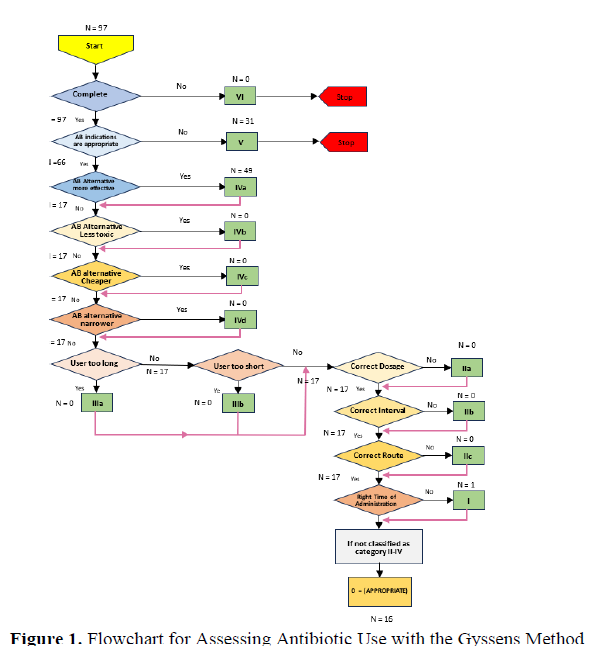
Prophylactic antibiotics are used before, during, and up to 24 hours after surgery, and can be administered to patients 30-60 minutes before surgery, must adhere to the principle of “Right Antibiotics”. This study aims to assess the application of prophylactic antibiotics in surgical patients in a private hospital in Yogyakarta to promote rational antibiotic use. This study is quantitative and non-experimental. Data were collected prospectively over a period of 30 days from August 4 to September 4, 2024. The study sample consisted of all surgical patients who received prophylactic antibiotics. Prophylactic antibiotic data were analyzed using the Gyssens method. Out of the data collected, 110 patients received preventive antibiotics, and 97 of these patients met the inclusion criteria. Patient characteristics predominantly included a 46% incidence of cesarean sections. Prophylaxis employed three antibiotics, viz. ceftriaxone in 78 patients (79.38%), cefazolin in 19 patients (19.59%), and cefotaxime in 1 patient (1.03%). The assessment utilizing the Gyssens approach revealed that 31 patients were classified into category V (no indication), 49 patients into category IVA (more effective antibiotics available), and one patient into category I (not suitable during prophylaxis). Sixteen patients in category 0 were included in the reasonable antibiotic regimen. This study states that most antibiotics are not in accordance with the Guidelines for Antibiotic Use established by the Ministry of Health of the Republic of Indonesia in 2021.
References
Agustina, E., & Syahrul, F. (2017). The Effect of Operating Procedure with Infection Incidence on Contaminated Cleaning Operating Patients (Case Control Study in RSU Haji Surabaya). Jurnal Berkala Epidemiologi, 5(3), 351–360. https://doi.org/10.20473/jbe.v5i3.2017
Ahmed, N. J., Haseeb, A., Alamer, A., Almalki, Z. S., Alahmari, A. K., & Khan, A. H. (2022). Meta-Analysis of Clinical Trials Comparing Cefazolin to Cefuroxime, Ceftriaxone, and Cefamandole for Surgical Site Infection Prevention. Antibiotics, 11(11). https://doi.org/10.3390/antibiotics11111543
Arteaga-Livias, K., Panduro-Correa, V., Maguiña, J. L., Osada, J., Rabaan, A. A., Lijarza-Ushinahua, K., Barboza, J. J., Gomez-Gonzales, W., & Rodriguez-Morales, A. J. (2023). Compliance with Antibiotic Prophylaxis in Obstetric and Gynecological Surgeries in Two Peruvian Hospitals. Antibiotics, 12(5). https://doi.org/10.3390/antibiotics12050808
Berriós-Torres, S. I., Umscheid, C. A., Bratzler, D. W., Leas, B., Stone, E. C., Kelz, R. R., Reinke, C. E., Morgan, S., Solomkin, J. S., Mazuski, J. E., Dellinger, E. P., Itani, K. M. F., Berbari, E. F., Segreti, J., Parvizi, J., Blanchard, J., Allen, G., Kluytmans, J. A. J. W., Donlan, R., & Schecter, W. P. (2017). Centers for disease control and prevention guideline for the prevention of surgical site infection, 2017. In JAMA Surgery (Vol. 152, Issue 8, pp. 784–791). American Medical Association. https://doi.org/10.1001/jamasurg.2017.0904
Bratzler, D. W., Dellinger, E. P., Olsen, K. M., Perl, T. M., Auwaerter, P. G., Bolon, M. K., Fish, D. N., Napolitano, L. M., Sawyer, R. G., Slain, D., Steinberg, J. P., & Weinstein, R. A. (2013). Clinical practice guidelines for antimicrobial prophylaxis in surgery. American Journal of Health-System Pharmacy, 70(3), 195–283. https://doi.org/10.2146/ajhp120568
Bui, T., Patel, P., & Preuss, C. V. (2024, February 17). Cephalosporins: STATPEARLS. National Library of Medicine. https://www.ncbi.nlm.nih.gov/books/NBK551517/
CDC, Ncezid, & DHQP. (2024). Surgical Site Infection Event (SSI). https://www.cdc.gov/nhsn/pdfs/ps-analysis-resources/ImportingProcedureData.pdf.
Charernsuk, M., Tunruttanakul, S., Jamjumrat, L., & Chareonsil, B. (2024). Evaluation of preoperative antibiotic prophylaxis in clean-wound general surgery procedures: a propensity score-matched cohort study at a regional hospital. BMC Surgery, 24(1), 294. https://doi.org/10.1186/s12893-024-02616-8
Chong, J. U., Lim, J. H., Kim, J. Y., Kim, S. H., & Kim, K. S. (2015). The role of prophylactic antibiotics on surgical site infection in elective laparoscopic cholecystectomy. Korean Journal of Hepato-Biliary-Pancreatic Surgery, 19(4), 188. https://doi.org/10.14701/kjhbps.2015.19.4.188
Coates, M., Shield, A., Peterson, G. M., & Hussain, Z. (2022). Prophylactic Cefazolin Dosing in Obesity—a Systematic Review. In Obesity Surgery (Vol. 32, Issue 9, pp. 3138–3149). Springer. https://doi.org/10.1007/s11695-022-06196-5
Crader, M., & Varacallo, M. (2023, August 4). Preoperativee Antibiotic Prophylaxis. StatPearls.
De Jonge, S. W., Gans, S. L., Atema, J. J., Solomkin, J. S., Dellinger, P. E., & Boermeester, M. A. (2017). Timing of preoperative antibiotic prophylaxis in 54,552 patients and the risk of surgical site infection. In Medicine (United States) (Vol. 96, Issue 29). Lippincott Williams and Wilkins. https://doi.org/10.1097/MD.0000000000006903
Erdani, F., Novika, R., Ramadhana, I. F., Ksm, B. /, Fakultas, B., Universitas, K., Kuala, S., Rsud, /, Abidin, D. Z., Aceh, B., Farmasi, B., & Abidin, R. D. Z. (2021). Evaluasi Penggunaan Antibiotik Profilaksis terhadap Kejadian Infeksi Luka Operasi pada Operasi Bersih dan Bersih Terkontaminasi di RSUD dr. Zainoel Abidin. Journal of Medical Science Jurnal Ilmu Medis Rumah Sakit Umum Dr. Zainoel Abidin, 2(1), 21–28.
Gyssens, I. (2006). Audits for Monitoring the Quality of Antimicrobial Prescriptions. In Antibiotic Policies: Theory and Practice (pp. 197–226). https://doi.org/10.1007/0-387-22852-7_12
Heffernan, A., Alawie, J., Wallis, S. C., Naicker, S., Adiraju, S., Roberts, J. A., & Sime, F. B. (2021). Pharmacodynamic evaluation of a single dose versus a 24-hour course of multiple doses of cefazolin for surgical prophylaxis. Antibiotics, 10(5). https://doi.org/10.3390/antibiotics10050602
Ierano, C., Manski-Nankervis, J. A., James, R., Rajkhowa, A., Peel, T., & Thursky, K. (2017). Surgical antimicrobial prophylaxis. Australian Prescriber, 40(6), 225–229. https://doi.org/10.18773/austprescr.2017.073
Kemenkes RI. (2021). Peraturan Menteri Kesehatan RI Tentang Pedoman Penggunaan Antibiotik.
Lofholm, P. W., & Katzung, B. G. (2024). Rational Prescribing & Prescription Writing. In T. W. Vanderah (Ed.), Katzung’s Basic & Clinical Pharmacology, 16th Edition. McGraw-Hill. accessmedicine.mhmedical.com/content.aspx?aid=1204147446
Megawati, S., Rahmawati, F., & Wahyono, D. (2015). EVALUASI PENGGUNAAN ANTIBIOTIK PROFILAKSIS PADA PASIEN BEDAH EVALUATION OF THE USE OF ANTIBIOTIC PROPHYLAXIS IN SURGERY PATIENTS. https://doi.org/https://doi.org/10.22146/jmpf.138
Pardo, A., Ntabaza, V., Rivolta, M., Goulard, A., Sténuit, S., Demeester, R., Milas, S., Duez, P., Patris, S., Joris, M., Dony, P., & Cherifi, S. (2022). Impact of collaborative physician-pharmacist stewardship strategies on prophylactic antibiotic practices: a quasi-experimental study. Antimicrobial Resistance and Infection Control, 11(1). https://doi.org/10.1186/s13756-022-01138-3
Rahayu, A., Rahmawati, F., Andayani, T. M., & Siradjuddin, A. (2021). Uji Perbandingan Antibiotik Profilaksis Ceftriaxone versus Cefazolin pada Bedah Obstetri dan Ginekologi. JURNAL MANAJEMEN DAN PELAYANAN FARMASI (Journal of Management and Pharmacy Practice), 10(4). https://doi.org/10.22146/jmpf.59779
Rink, M., Gladstone, B. P., Nikolai, L. A., Bitzer, M., Tacconelli, E., & Göpel, S. (2025). The Impact of Antibiotic Prophylaxis on Antibiotic Resistance, Clinical Outcomes, and Costs in Adult Hemato-Oncological and Surgical Patients: A Systematic Review and Meta-Analysis. Antibiotics, 14(9), 853. https://doi.org/10.3390/antibiotics14090853
Sartelli, M., Boermeester, M. A., Cainzos, M., Coccolini, F., de Jonge, S. W., Rasa, K., Dellinger, E. P., McNamara, D. A., Fry, D. E., Cui, Y., Delibegovic, S., Demetrashvili, Z., De Simone, B., Gkiokas, G., Hardcastle, T. C., Itani, K. M. F., Isik, A., Labricciosa, F. M., Lohsiriwat, V.,Barie, P. S. (2023). Six Long-Standing Questions about Antibiotic Prophylaxis in Surgery. In Antibiotics (Vol. 12, Issue 5). MDPI. https://doi.org/10.3390/antibiotics12050908
Sartelli, M., Coccolini, F., Carrieri, A., Labricciosa, F. M., Cicuttin, E., & Catena, F. (2021). The “torment†of surgical antibiotic prophylaxis among surgeons. Antibiotics, 10(11). https://doi.org/10.3390/antibiotics10111357
Sefah, I. A., Chetty, S., Yamoah, P., & Bangalee, V. (2024). The impact of antimicrobial stewardship interventions on appropriate use of surgical antimicrobial prophylaxis in low- and middle-income countries: a systematic review. Systematic Reviews, 13(1). https://doi.org/10.1186/s13643-024-02731-w
Seidelman, J. L., Mantyh, C. R., & Anderson, D. J. (2023). Surgical Site Infection Prevention: A Review. In JAMA (Vol. 329, Issue 3, pp. 244–252). American Medical Association. https://doi.org/10.1001/jama.2022.24075
SHC. (2017). SHC Surgical Antimicrobial Prophylaxis Guidelines. https://med.stanford.edu/content/dam/sm/bugsanddrugs/documents/clinicalpathways/SHC-Surgical-Prophylaxis-ABX-Guideline.pdf
Sihite, E. N., Ramadhan, A. M., & Samsul, E. (2021). Evaluasi Penggunaan Antibiotik Secara Kuantitatif dan Kualitatif Pada Pasien Bedah Digestif di RSUD Abdul Wahab Sjahranie Samarinda. Proceeding of Mulawarman Pharmaceuticals Conferences, 14, 214–221. https://doi.org/10.25026/mpc.v14i1.552
Sumiwi, S. (2014). Quality of Antibiotics Use in Patients with Digestive Surgery in Hospital in Bandung City. Indonesian Journal of Clinical Pharmacy, 3(4), 135–140. https://doi.org/10.15416/ijcp.2014.3.4.135
Surat, G., Meyer-Sautter, P., Rüsch, J., Braun-Feldweg, J., Markus, C. K., Germer, C. T., & Lock, J. F. (2022). Cefazolin Might Be Adequate for Perioperative Antibiotic Prophylaxis in Intra-Abdominal Infections without Sepsis: A Quality Improvement Study. Antibiotics, 11(4). https://doi.org/10.3390/antibiotics11040501
Tamma, P. D., Avdic, E., Li, D. X., Dzintars, K., & Cosgrove, S. E. (2017). Association of adverse events with antibiotic use in hospitalized patients. JAMA Internal Medicine, 177(9), 1308–1315. https://doi.org/10.1001/jamainternmed.2017.1938
WHO. (2018). Global guidelines for the prevention of surgical site infection. World Health Organization.
WHO. (2023). People-centred approach to addressing antimicrobial resistance in human health- WHO core package of intervensions to support national action plan. https://www.who.int/publications/i/item/9789240082496
Zazuli, Z., Sukandar, E. Y., & Lisni, I. (2015). Antibiotic Use Evaluation in Surgery Patients at a Private Hospital in Bandung. Indonesian Journal of Clinical Pharmacy, 4(2), 87–97. https://doi.org/10.15416/ijcp.2015.4.2.87
Zunnita, O., Sumarny, R., & Kumalawati, J. (2019). Pengaruh Antibiotik Profilaksis Terhadap Kejadian Infeksi Luka Operasi. FITOFARMAKA: Jurnal Ilmiah Farmasi, 8(1), 39–44. https://doi.org/10.33751/jf.v8i1.1170